Our world
A family, four businesses, one patch of soil.
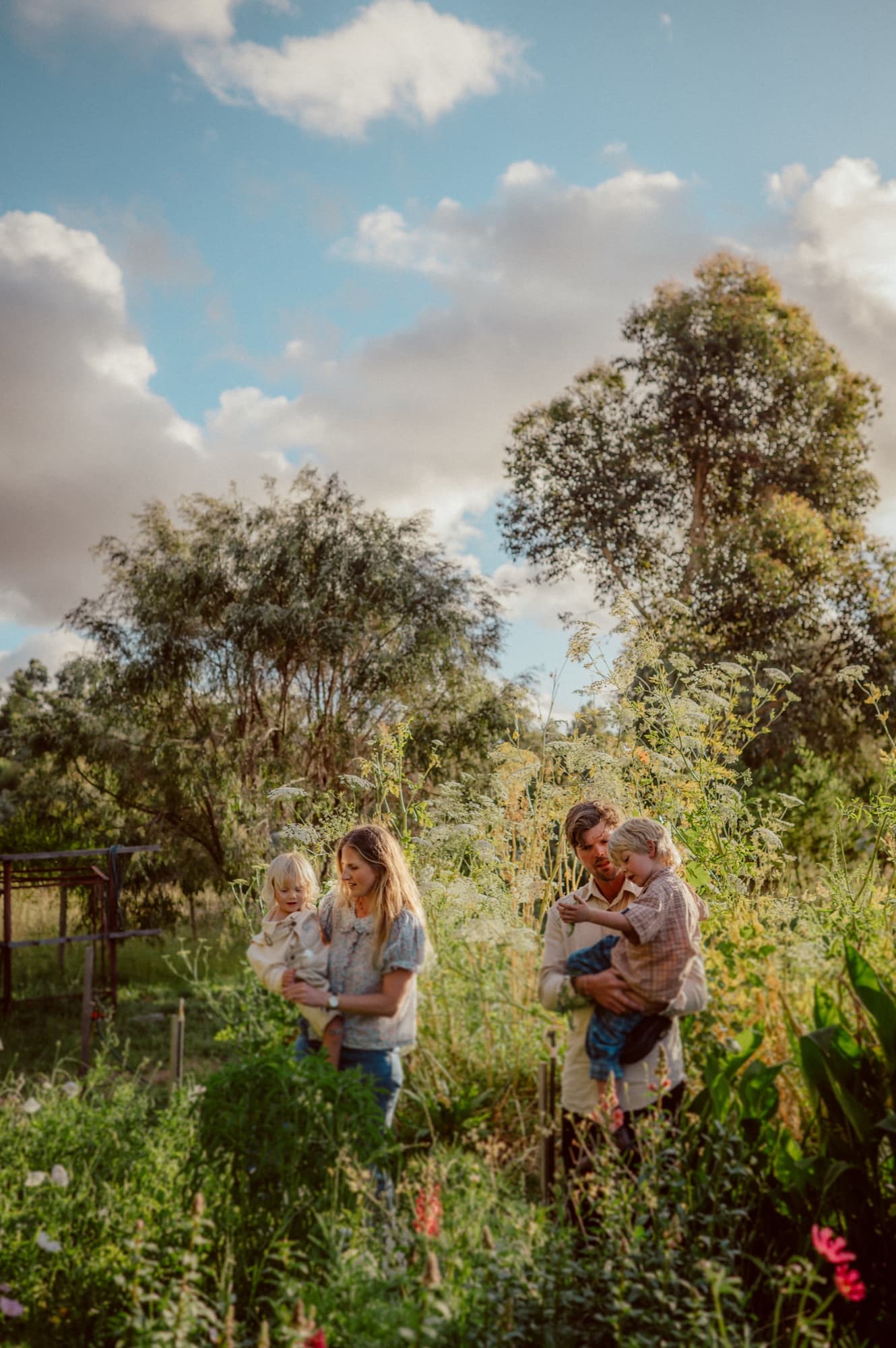
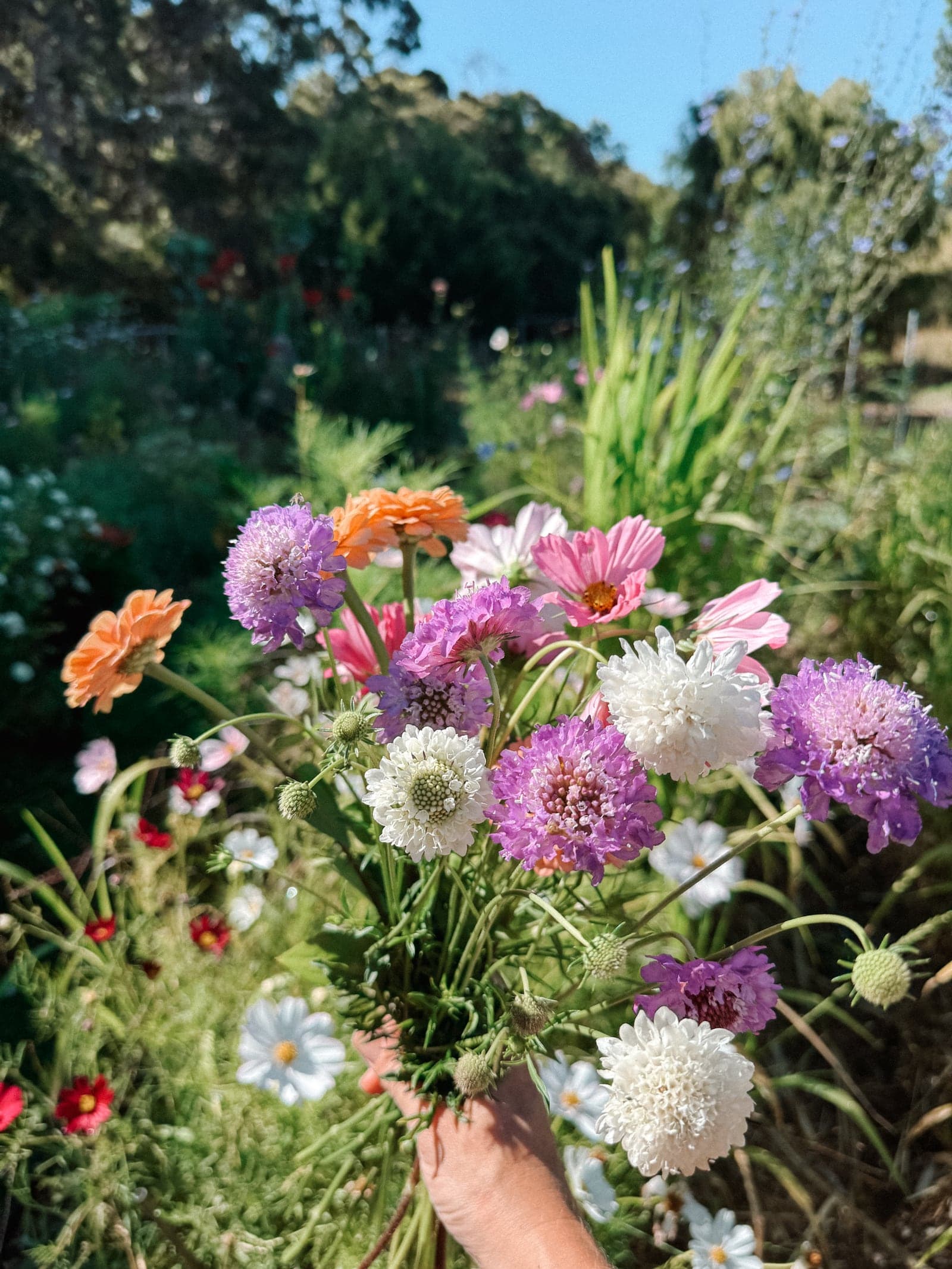
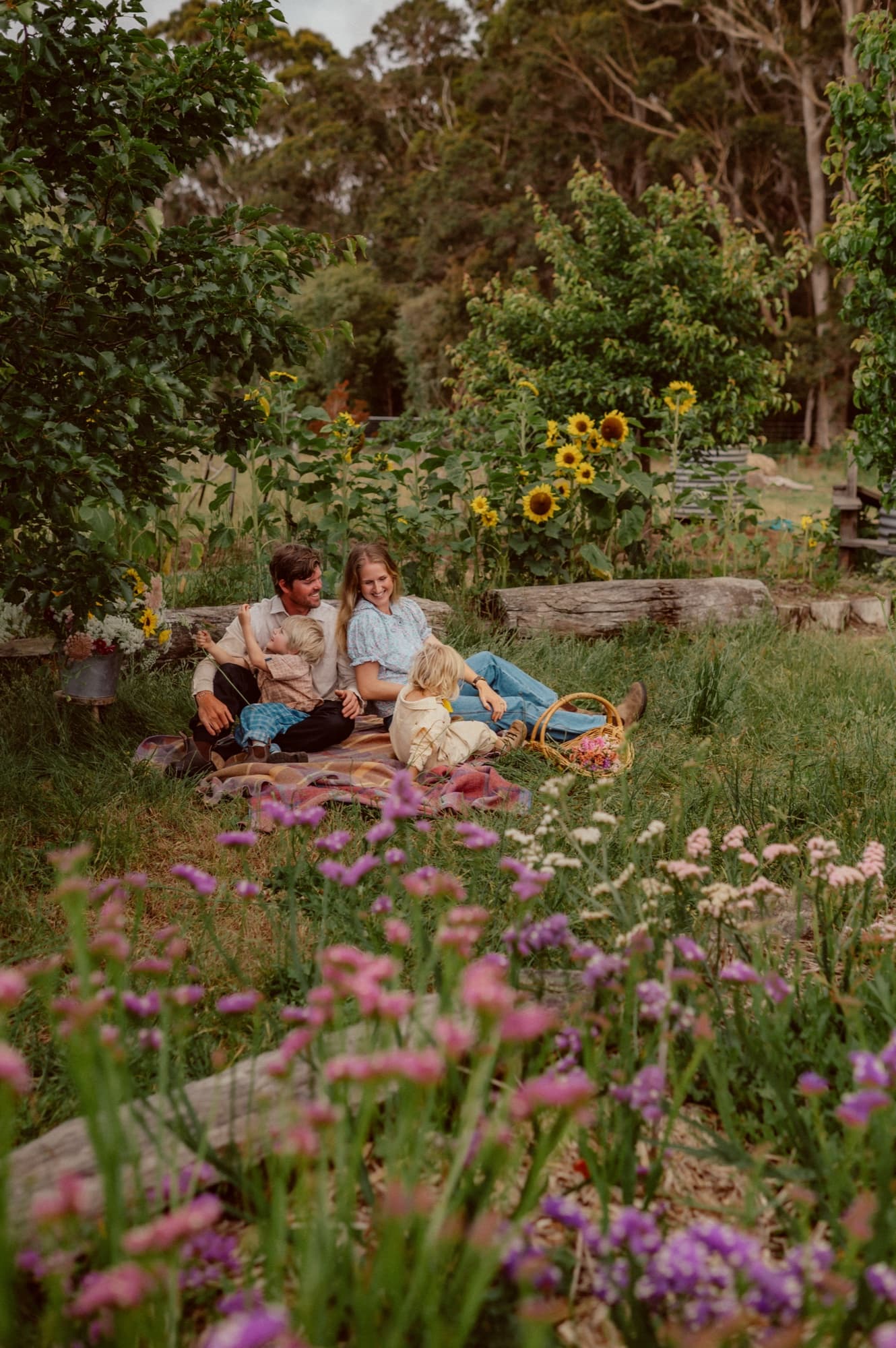
We’re a family in a small clearing in the karri country outside Karridale, in the South West of Western Australia. The flowers grow in long beds behind the shed. The kitchen garden is next to them. The kelpie supervises both.
We run four businesses between us — compost, nourishment, soil science, and the rows you’re looking at. This is the one that gets to be a little personal.
The compost feeds the rows. The soil school teaches what the rows already know. The nourishment closes the loop with the kitchen. And the rows themselves — those are the part of our world that grows in colour. They’re where we test everything we believe about soil; they’re where our kids run barefoot at six in the morning.
The other sites in the family are strictly business. This one isn’t. Welcome to the messy, generous middle of it — the kelpie, the rows at first light, the bench where Grace writes her kitchen plans on the back of seed envelopes.
Good soil grows good food and flowers; slow seeds and slow cooking come from the same place. “Feel good” isn’t a marketing line for us — it’s what we’re trying to make.
Wildsoil Compost
Compost shouldn’t be dead.
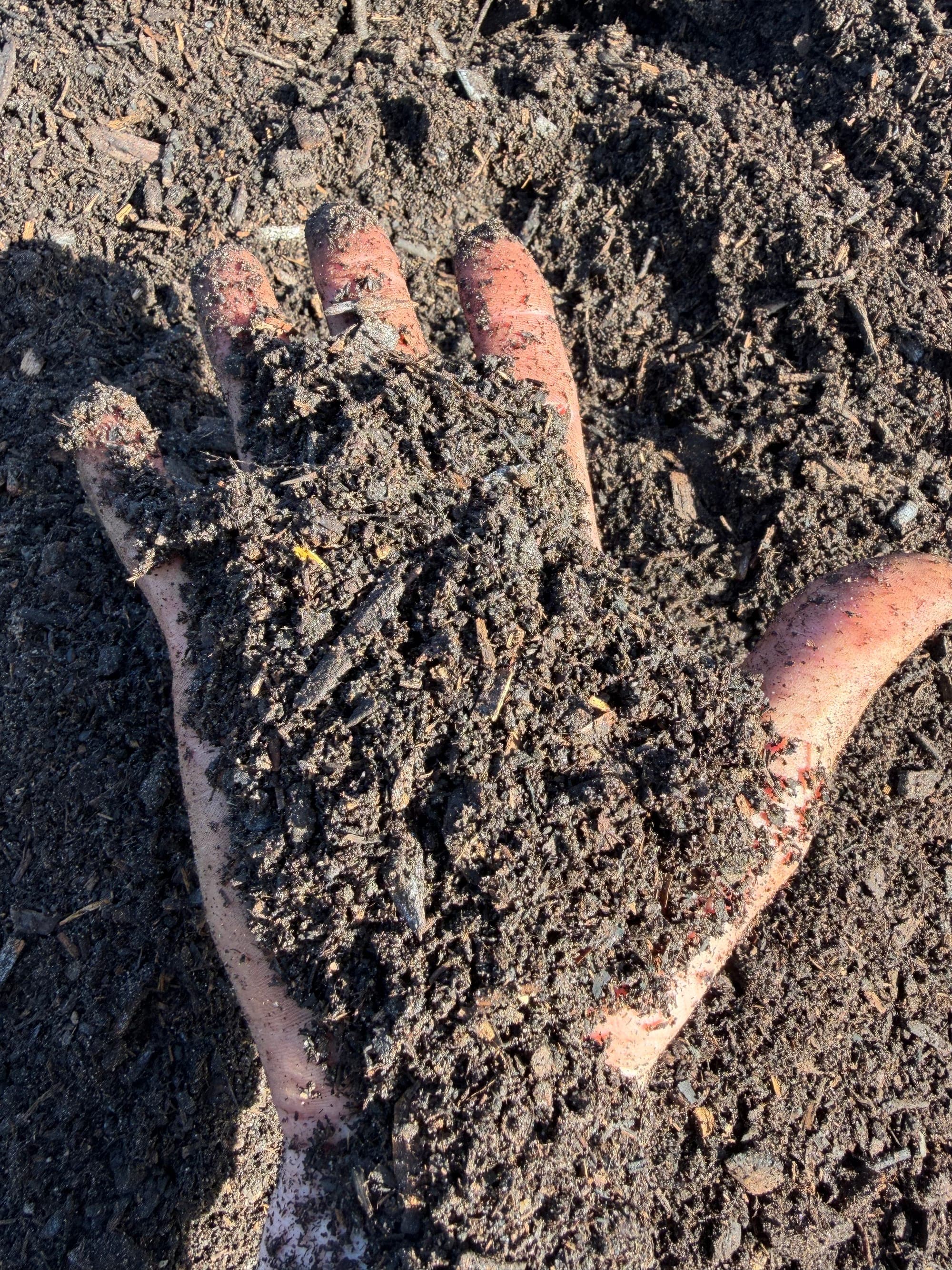
David built Wildsoil with his best mate Mitch, who owns Norcape, because most bagged compost in this country is, with some honourable exceptions, dead — sterile, dry, processed past the point of usefulness. Compost shouldn’t be dead. It should be a living, breathing ecosystem. Billions of microbes, the slow heat of decomposition, the smell of something useful happening.
They make it in long windrows in Busselton, turning by tractor, monitoring temperature like sourdough starter. The compost is what every bed at Feel Good Farm is fed with. If our flowers come up true and the beds carry through summer, the soil beneath them is doing the work.
Mumma Feel Good
Real food for new mothers.
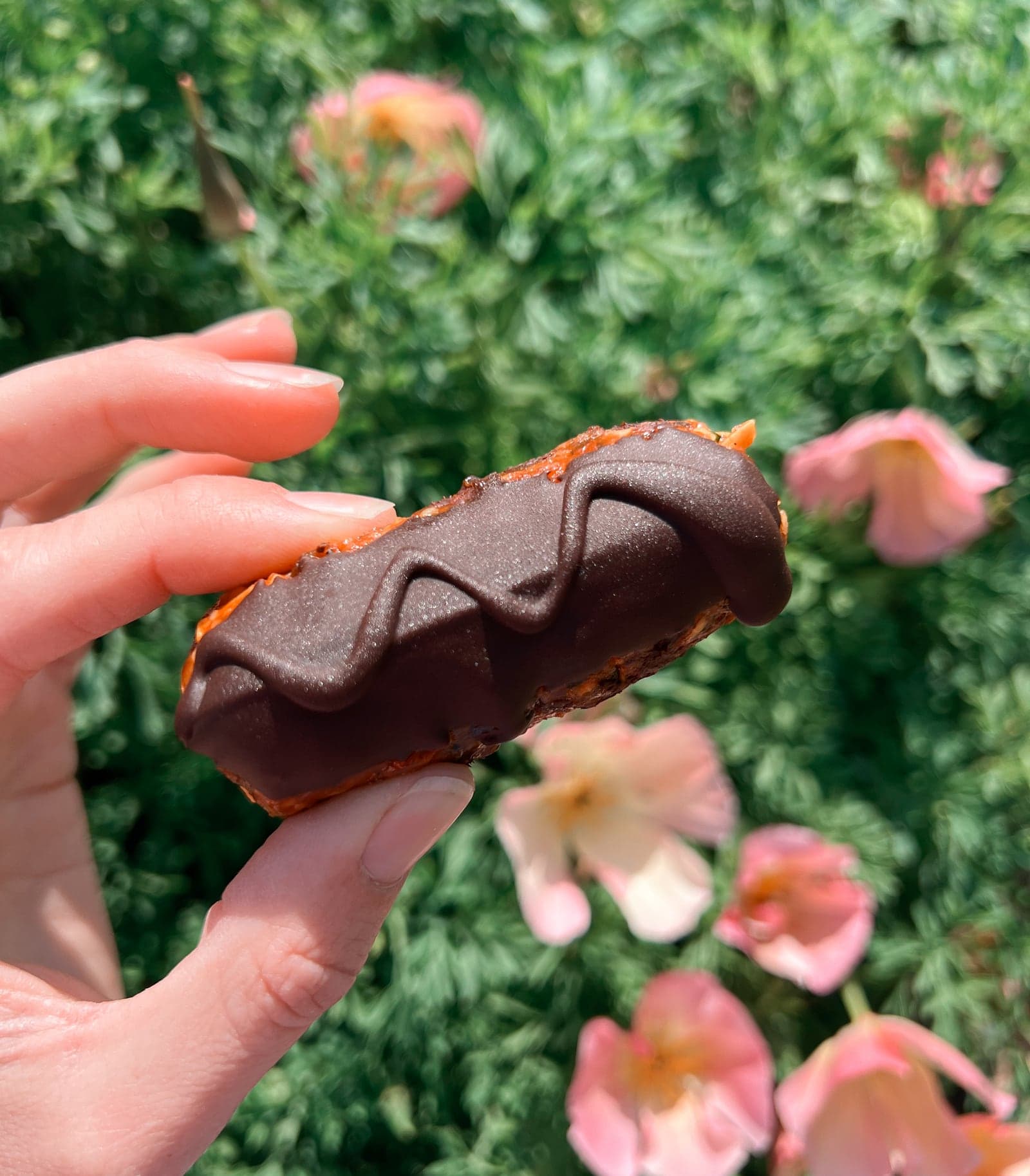
Grace started Mumma Feel Good after her first birth, when she realised the food a new mother actually needs is almost the opposite of what gets brought to her doorstep. Slow-cooked, mineral-rich, easy to eat one-handed at three in the morning.
She runs weekly Nourish Packs through the Margaret River region — kitchari, dhal, bone broths, granola, lactation cookies, the things her midwife wishes more mothers had in their fridges. It’s the kitchen end of the same conviction the farm is built on: real food, made slowly, by hand.
Healthy soil grows healthy food, healthy flowers and healthy humans. That’s why we bought the farm — so the whole chain, from the microbes up, is one we can stand behind.
Smartsoil
Learn it, then run it.
David and his brother co-founded Smartsoil to put serious regenerative growers in front of the people who want to learn from them. They don’t teach the courses themselves — they built the platform and curated the people who do.
Smartsoil EDU is the school: a library of courses on cover cropping, microbial life, multi-species pasture and grazing planning, each one written and taught by the working grower behind it. Colin Seis, Dr Judi Earl and Kevin Elmy are among the people teaching there — alongside trials, a member community, and the arguments that come with both.
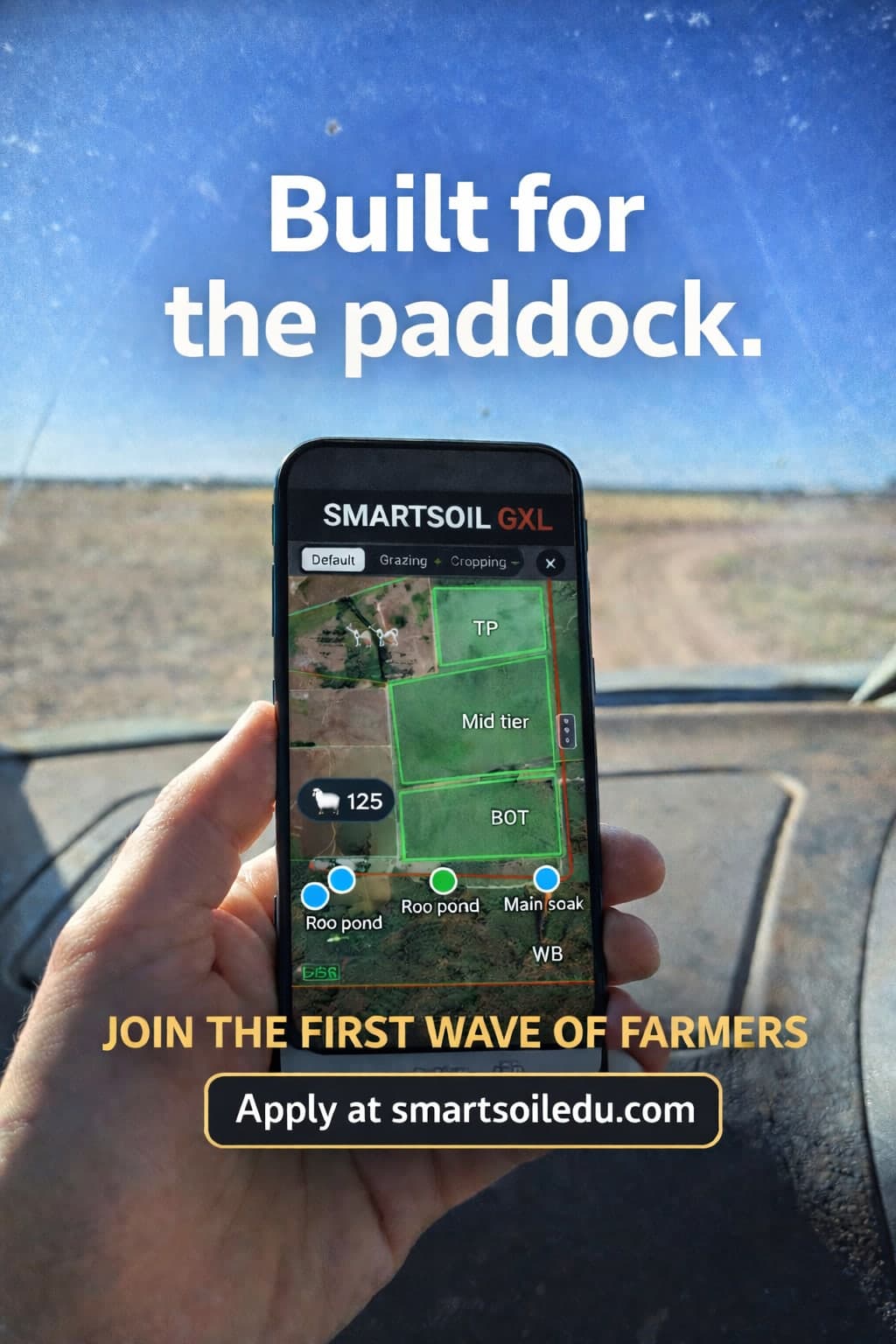
Smartsoil GXLis what you run once you’ve learned it — the world’s first voice-controlled farm operating system. Map your paddocks, track mobs and stock numbers, mark every water point, and switch between grazing and cropping views by speaking to it, hands still on the wheel. Built for farmers doing the real thing at scale, where the nearest desk is a long way from the paddock.
Feel Good Flowers
Bouquets twice a year. By the season.
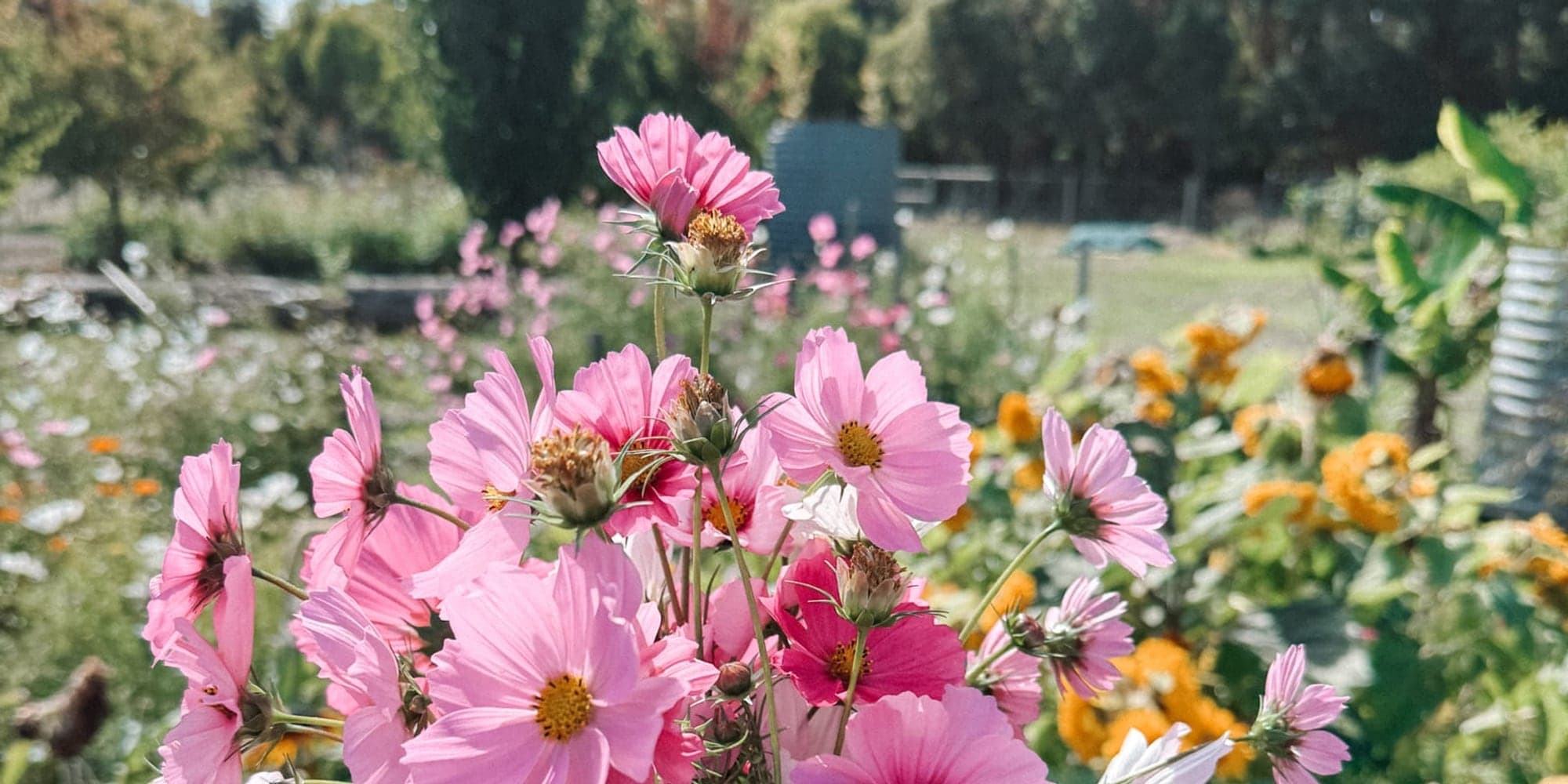
Feel Good Flowers is Grace’s flower business — run with her business partner from beds on the farm. Two seasonal subscriptions a year (Spring and Summer), pre-paid runs of bouquets that pick up from the farm gate or get short-radius delivered through the South West. A handful of weddings each season, when the calendar allows.
The subscriptions are how we keep the rows worth growing. Both seasons run on capped numbers, opened through the newsletter first — they’ve sold from the list alone the last two years. The full picture, with the season-by-season detail, lives on the Feel Good Flowers page.
The channel
How we got here, on YouTube.
A handful of films from the move — looking for land, finding this clearing, and the first months of turning it into a farm. Partly to show our parents what we were doing. Partly because it was too good to keep to ourselves. No script, no agenda. We film more when the season lets us.
Four businesses, one family.
They all keep coming back to the same patch of soil, and to each other. You’re welcome in any of them. We’re mostly out in the rows.